
The Moral Code
The RoadThe ethical principles the man and boy live by: not eating people, helping when possible, carrying the fire.
increasing Bearing strength in each event
 decreasing
Bearing strength in each eventdecreasingWe Wouldn't Eat Anybody
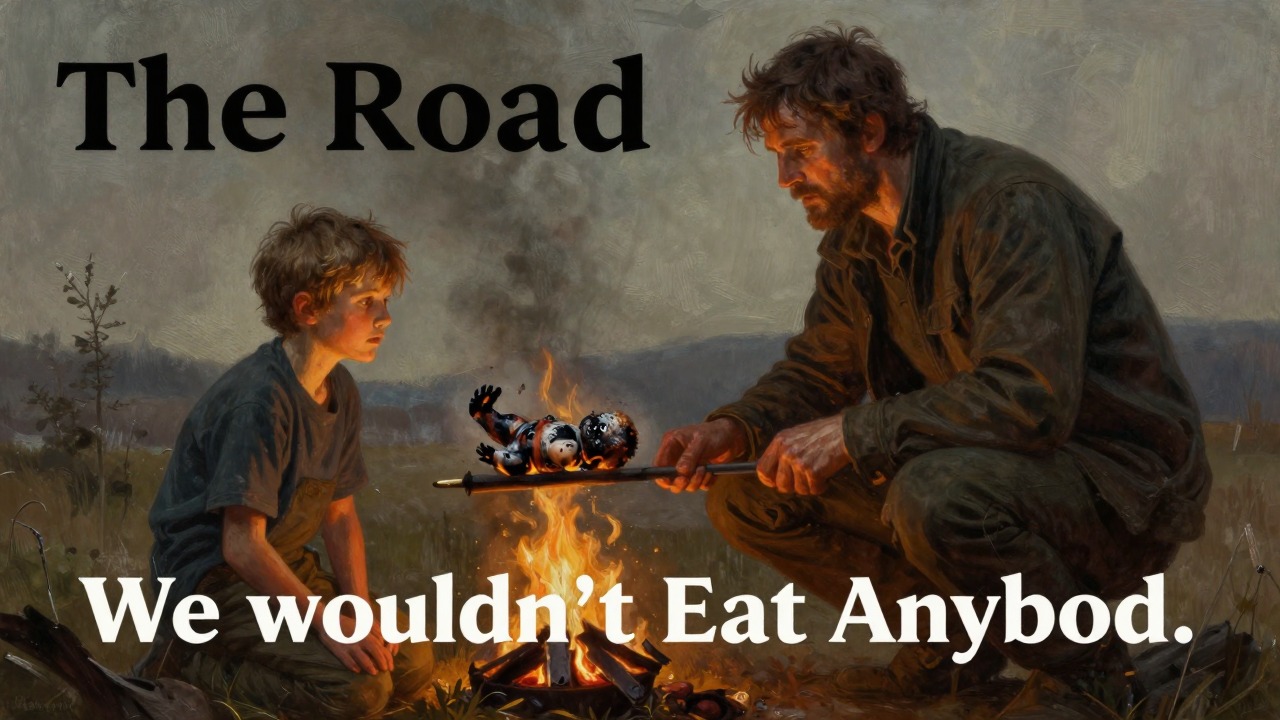
The Vow
The Question
After they see the charred baby on the spit, the boy asks if they would ever eat anybody. The man says no, even if they were starving.
The Reason
The man says they are the good guys, and they carry the fire. The boy accepts this. It is the foundation of their identity.
The Promise
The boy repeats: 'We wouldn't eat anybody. No matter what.' The man agrees. This is the ultimate moral boundary.
The Test of the Thief
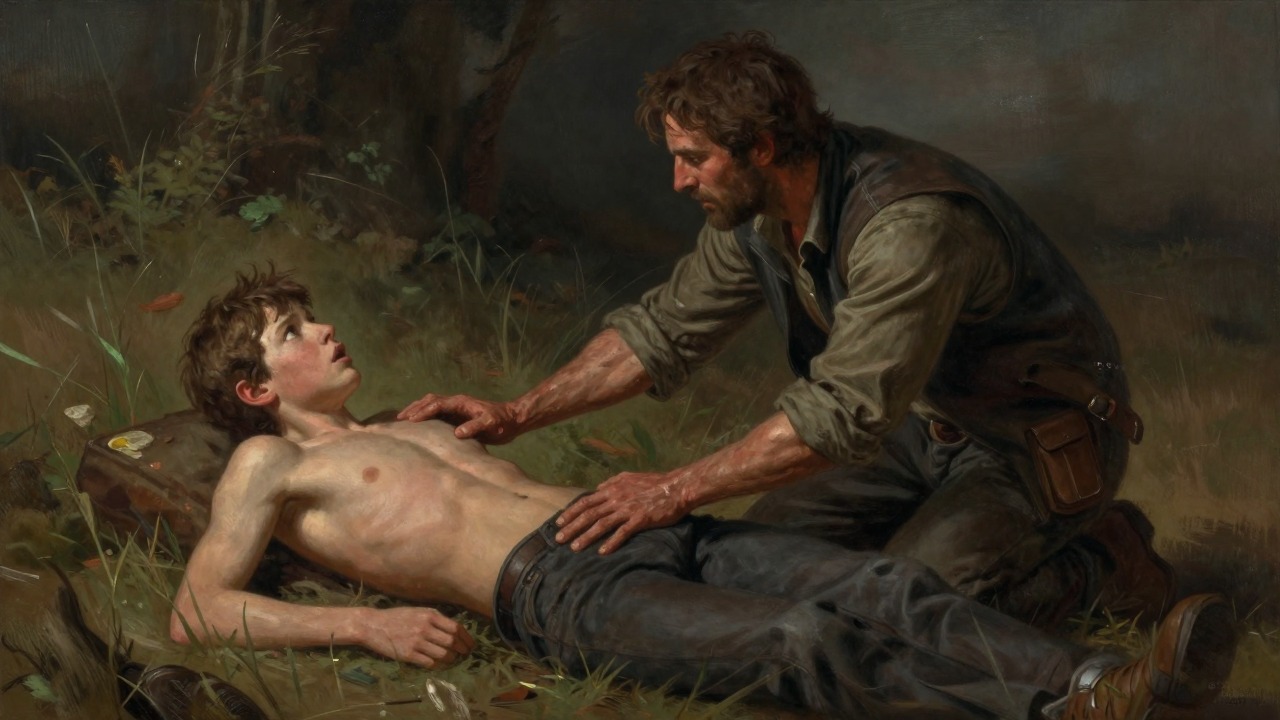
The Dilemma
The Confrontation
The man forces the thief to strip naked, leaving him to die. The boy is horrified. He asks if they are still the good guys.
The Justification
The man says he was just hungry, but the boy says they killed him. The man argues, but the boy is not convinced. The moral code is tested.
The Outcome
The boy's compassion clashes with the man's survival instinct. The boy learns that even good guys can do terrible things. The code is not absolute.
Keep Trying
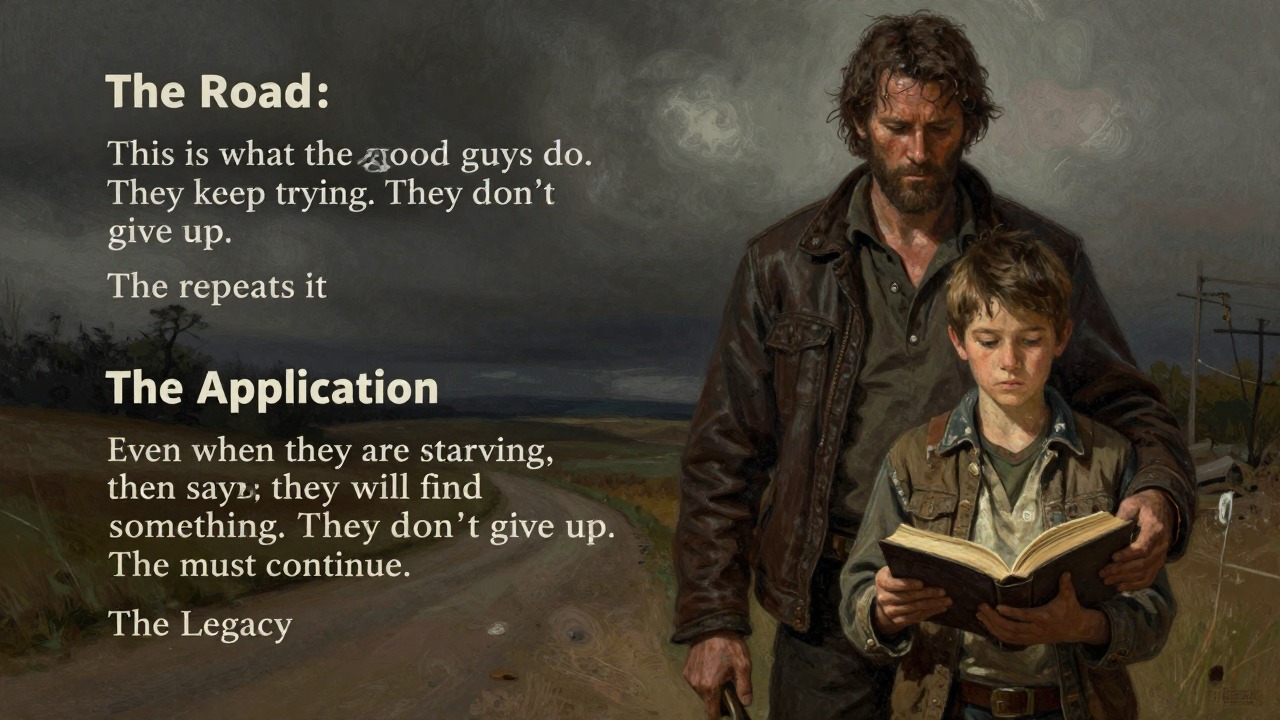
The Mantra
The Instruction
The man says: 'This is what the good guys do. They keep trying. They don't give up.' The boy repeats it.
The Application
Even when they are starving, the man says they will find something. They don't give up. The boy must continue.
The Legacy
The boy carries this instruction into his new life. He keeps trying. He is the best guy.
after the encounter with the cannibals
after the beach
before the father's death
